Life & History
Chandraprabha, whose name means 'moon-radiant,' is said to have been born at Chandrapuri, a city associated in tradition with the banks of the Ganga, to King Mahasena and Queen Lakshmana Devi.
As with the other early Tirthankaras of this age, detailed historical biography is sparse; his life is preserved mainly through devotional narrative and temple tradition rather than verifiable historical record.
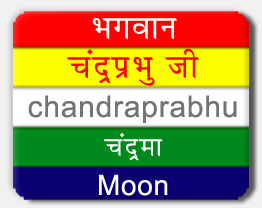
He is recognized by his emblem, the crescent moon, reflecting the meaning of his name and often depicted in accompanying iconography.
Chandraprabha is remembered as one in the unbroken lineage of Tirthankaras who attained omniscience and re-established the Jain teaching of liberation for beings of his era.
Teaching & Significance
Chandraprabha, like every Tirthankara, is honored for showing the path of ahimsa, self-discipline, and liberation of the soul, with the moon symbolizing the coolness and clarity of right perception.
At a Glance
- Position
- Eighth of twenty-four
- Emblem (Lanchhana)
- Crescent Moon
- Traditional colour
- White
- Moksha Sthal
- Sammed Shikharji (Parasnath Hill, Jharkhand)