Life & History
Tradition holds that Shantinatha was born to King Vishvasena and Queen Achira (Aciradevi) of the Ikshvaku dynasty at Hastinapur. His name is directly connected to the word "shanti," meaning peace; devotional accounts hold that his presence, even in the womb, brought relief from an epidemic afflicting the kingdom, giving rise to his name and his enduring role as a figure invoked for peace and the warding off of calamity.
Distinctively among the Tirthankaras, Shantinatha is traditionally described as having also been a Chakravarti, ruling as a universal monarch with the legendary fourteen jewels and nine treasures, before renouncing his kingdom to pursue asceticism and ultimately attaining omniscience.
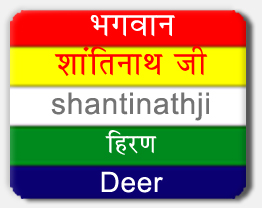
His emblem is the deer or antelope, an animal long associated in Jain iconography with gentleness and non-violence, fitting for a Tirthankara whose very name signifies peace.
Teaching & Significance
Shantinatha taught the universal Jain path of non-violence and right conduct, and is especially invoked by devotees seeking inner and outer peace, in keeping with the meaning of his name.
At a Glance
- Position
- 16th of twenty-four
- Emblem (Lanchhana)
- Deer
- Traditional colour
- Golden
- Moksha Sthal
- Sammed Shikhar (Parasnath Hills, Jharkhand)