Life & History
Parshvanatha holds a unique position among the Tirthankaras: he is generally recognized as the earliest Tirthankara for whom there is a reasonable scholarly case for historical existence, even though the surviving accounts of his life are, like those of other ancient figures, interwoven with legend and devotional narrative. Jain tradition dates his life to approximately 872–772 BCE, a span commonly cited in connection with placing him about 250 years before Mahavira, whose own dates are better attested.
He is traditionally described as the son of King Ashvasena and Queen Vama (Brahmi) of Varanasi (Kashi), making him a prince born in a city that remains a major center of Indian religious life to this day. Tradition holds that he renounced his royal life while still young to pursue ascetic practice.
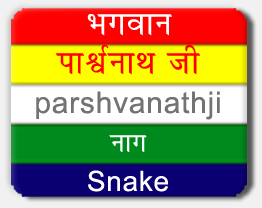
Parshvanatha's iconography is distinguished by the multi-hooded serpent canopy shown above his head, an emblem tied to a well-known episode of his life: while practicing austerities, he is said to have saved a pair of snakes from being burnt alive in a log of wood by an ascetic performing a fire sacrifice — an act of compassion for which the serpent deities Dharanendra and Padmavati are traditionally said to have later protected him from an attack by a hostile spirit, Kamatha, during a subsequent period of meditation.
His teaching is traditionally summarized as fourfold restraint (Chaturyama), covering non-violence, truthfulness, non-stealing, and non-possession — a formulation to which Mahavira is traditionally said to have added the vow of celibacy (brahmacharya) explicitly as a fifth, distinct vow. Some later Jain monastic communities that Mahavira encountered are described in early texts as following Parshvanatha's tradition, which is often cited as supporting evidence for his historical existence.
Parshvanatha is traditionally said to have attained moksha on Mount Sammeda (Sammed Shikhar), in present-day Madhuban in the Parasnath Hills of Jharkhand, a site that remains one of the holiest Jain pilgrimage destinations, sacred as the place where twenty of the twenty-four Tirthankaras are believed to have attained liberation.
Teaching & Significance
Parshvanatha taught a fourfold code of restraint — non-violence, truthfulness, non-stealing, and non-attachment/non-possession — as the path to spiritual liberation.
At a Glance
- Position
- 23rd of twenty-four
- Emblem (Lanchhana)
- Serpent
- Traditional colour
- Green
- Moksha Sthal
- Mount Sammeda (Sammed Shikhar / Parasnath Hills), Jharkhand